PANAMA HACIENDA LA ESMERALDA SPECIAL GEISHA MARIO ARRIBA 3FB LOW TEMPERATURE FERMENTATION
  • Load image into Gallery viewer, PANAMA HACIENDA LA ESMERALDA SPECIAL GEISHA MARIO ARRIBA 3FB LOW TEMPERATURE FERMENTATION
  • Load image into Gallery viewer, PANAMA HACIENDA LA ESMERALDA SPECIAL GEISHA MARIO ARRIBA 3FB LOW TEMPERATURE FERMENTATION
  • Load image into Gallery viewer, PANAMA HACIENDA LA ESMERALDA SPECIAL GEISHA MARIO ARRIBA 3FB LOW TEMPERATURE FERMENTATION
  • Load image into Gallery viewer, PANAMA HACIENDA LA ESMERALDA SPECIAL GEISHA MARIO ARRIBA 3FB LOW TEMPERATURE FERMENTATION
  • Load image into Gallery viewer, PANAMA HACIENDA LA ESMERALDA SPECIAL GEISHA MARIO ARRIBA 3FB LOW TEMPERATURE FERMENTATION
  • Load image into Gallery viewer, PANAMA HACIENDA LA ESMERALDA SPECIAL GEISHA MARIO ARRIBA 3FB LOW TEMPERATURE FERMENTATION
  • Load image into Gallery viewer, PANAMA HACIENDA LA ESMERALDA SPECIAL GEISHA MARIO ARRIBA 3FB LOW TEMPERATURE FERMENTATION
  • Load image into Gallery viewer, PANAMA HACIENDA LA ESMERALDA SPECIAL GEISHA MARIO ARRIBA 3FB LOW TEMPERATURE FERMENTATION
  • Load image into Gallery viewer, PANAMA HACIENDA LA ESMERALDA SPECIAL GEISHA MARIO ARRIBA 3FB LOW TEMPERATURE FERMENTATION
  • Load image into Gallery viewer, PANAMA HACIENDA LA ESMERALDA SPECIAL GEISHA MARIO ARRIBA 3FB LOW TEMPERATURE FERMENTATION

PANAMA HACIENDA LA ESMERALDA SPECIAL GEISHA MARIO ARRIBA 3FB LOW TEMPERATURE FERMENTATION

Regular price
1,650.00 ฿
Sale price
1,650.00 ฿
Regular price
Sold out
Unit price
per 


📍  NEW SPECIAL RELEASE 📍

2026 HARVEST

PANAMA

📍 HACIENDA LA ESMERALDA📍

SPECIAL GEISHA

MARIO ARRIBA 3FB

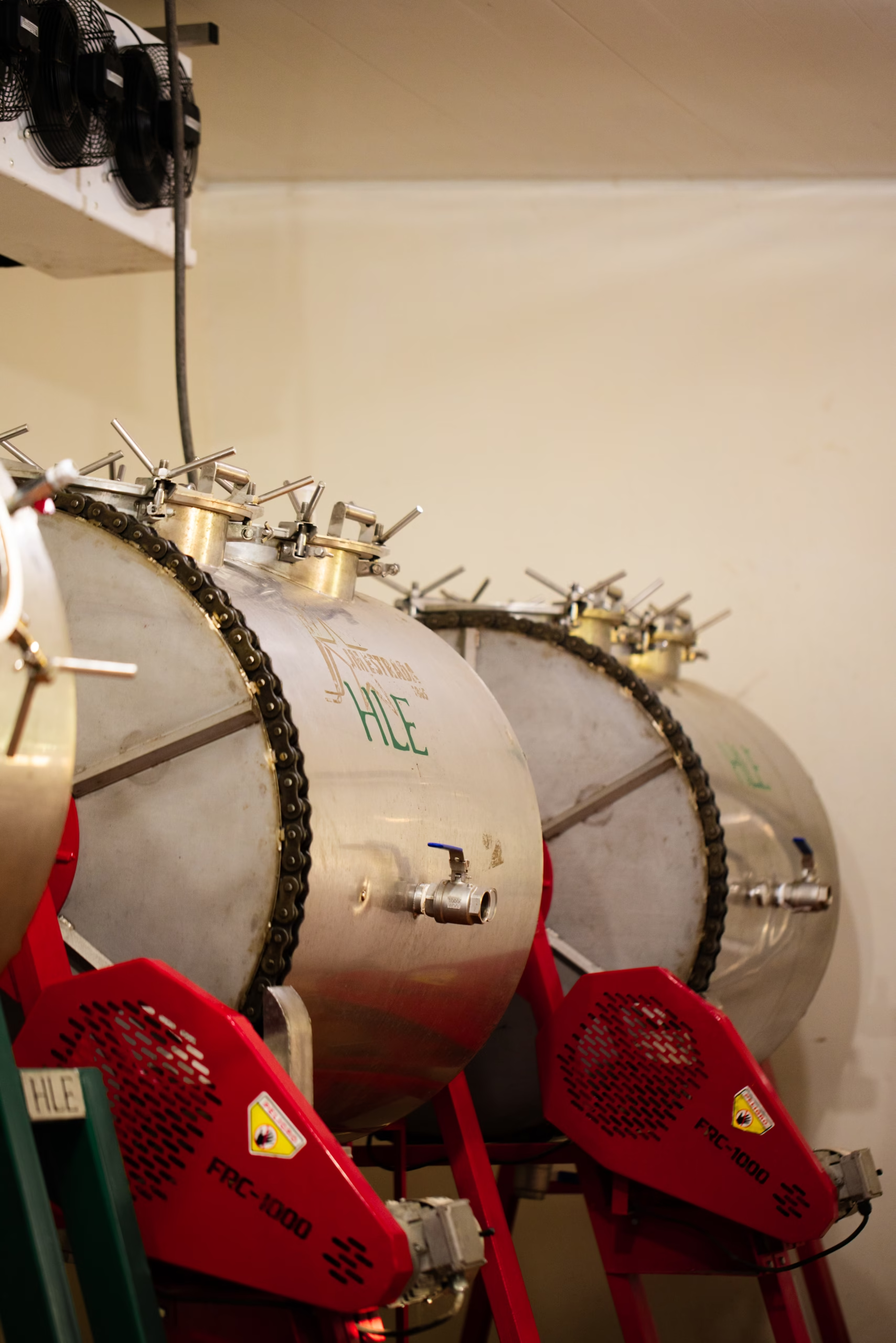
 LOW TEMPERATURE ROOOM FERMENTATION

SLOW DRIED  

JASMINE • PEACH • TANGERINE • SUGARCANE 


Mario Arriba 3 FB was harvested on

January 16th, 2026 from the highest part

of the Mario lot in Hacienda La Esmeralda’s

Jaramillo Farm. After harvest, the coffee

cherries were depulped, and subsequently

fermented in a low temperature room for 72

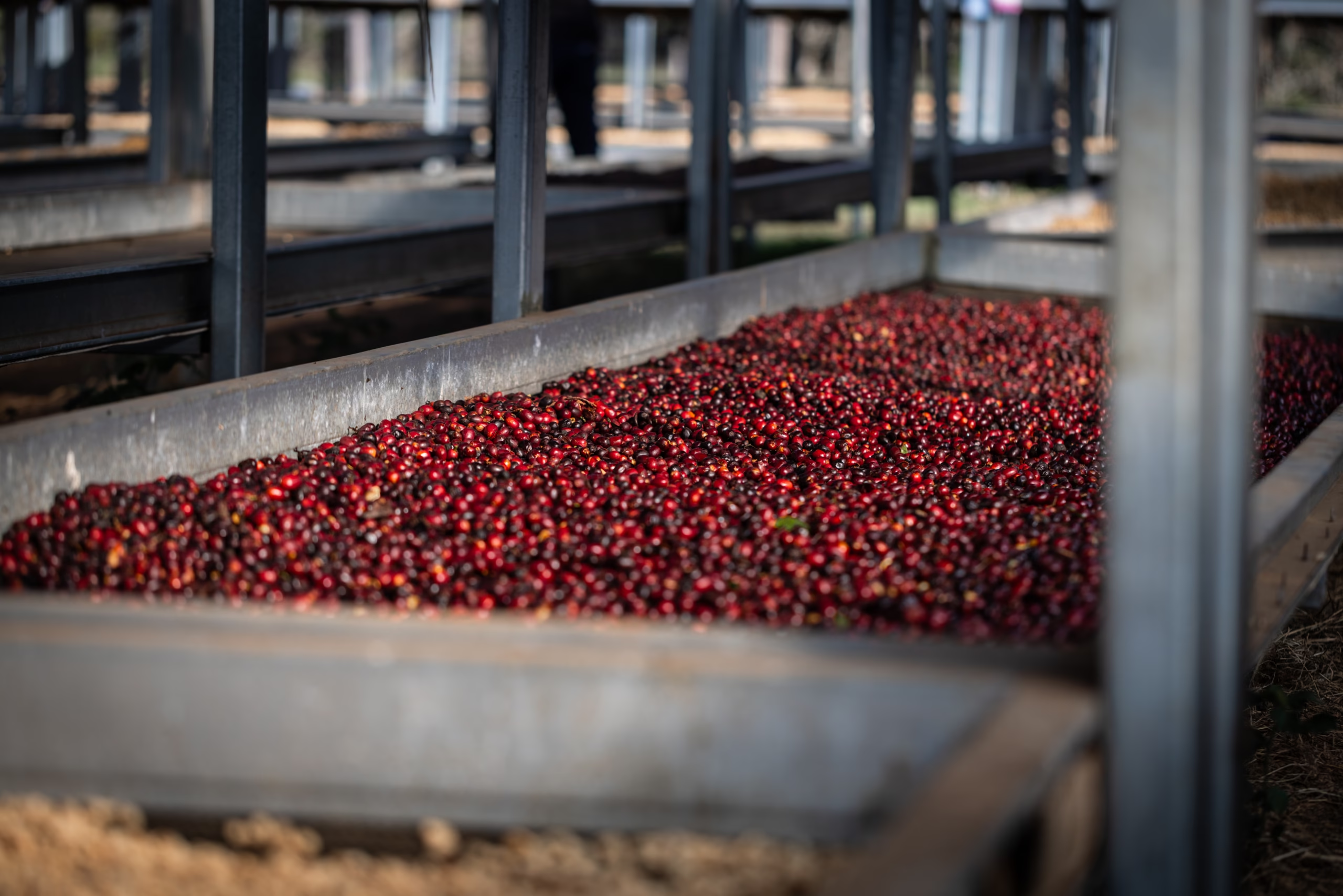
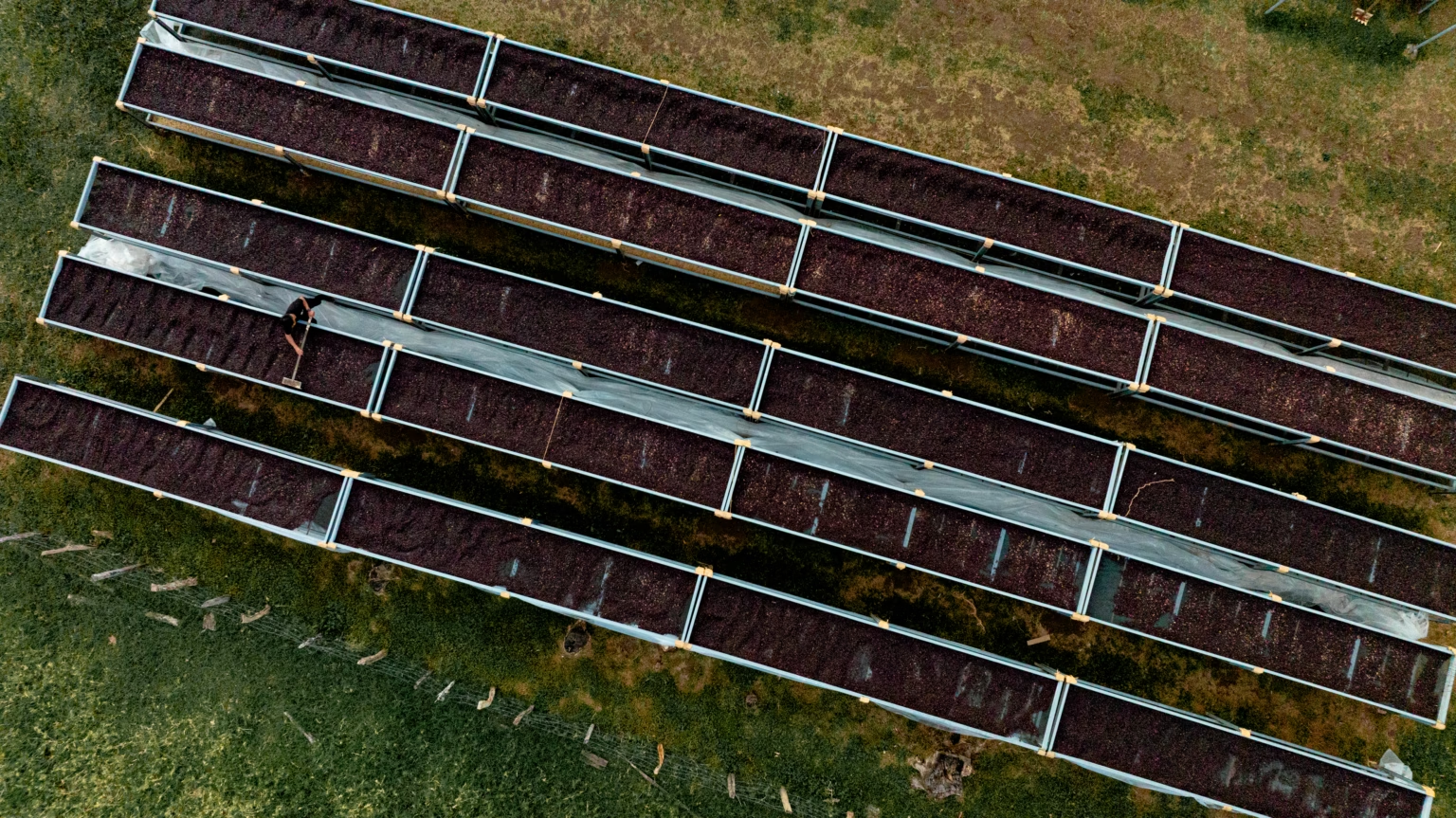
hours. This microlot coffee was slowly dried

on raised beds for 13 days. 

Lot Name: Mario

Varietal: Geisha

Farm: Jaramillo

Region: Jaramillo

Lot Altitude: +1650 masl

Process: Washed

Harvest Date: 16/01/2026

GPS (Lot): 8°46'51"N 82°24'3"W

Average Coffee Tree Age in Lot: 22 years

Total ha in Production in Lot: 12 ha

The lands that make up Hacienda La Esmeralda were first brought together as a single estate by a Swede named Hans Elliot in 1940. This land comprised several hundred hectares in what are now the Palmira and Cañas Verdes farms. In 1967, a Swedish- American banker by the name of Rudolph A. Peterson (1904-2003) bought Hacienda La Esmeralda as a retirement venture. At the time, the land was predominantly pasture for beef cattle, with some small smatterings of coffee mixed in.

By 1975 the Petersons had switched the farms over to dairy cattle which performed quite well and continues to make up half of Esmeralda’s farm land today. In the mid- 80s, the family was looking to further diversify and coffee, with its rich production history in the Boquete region, was a perfect opportunity.

Coffee had been growing on lands in and around Hacienda La Esmeralda since at least 1890. It was this huge reservoir of coffee knowledge and culture that helped the Petersons redevelop much of their land for coffee farming and even make their first coffee farm expansion at Palmira in 1988. It bears mentioning that coffee at this time was almost exclusively an undifferentiated, mass-market, endeavor in Panama. It was not until the mid-1990s that some North American coffee buyers started talking about Specialty Coffee widely.

In 1997 the Petersons purchased the land that became the Jaramillo Farm. This plot on the sides of Volcan Baru was selected for its high altitude, in hopes of developing higher scoring, livelier and more nuanced coffees. That said, it was only by serendipity that the famous Geisha coffee was planted on this farm

DESCRIPTION

The Jaramillo mountain air is wet and cold, perfect for making the aromatics of the Geisha variety sing. Though Geisha variety coffees had been planted sporadically across the area, it was a lot separated out from one small region on this farm that led to the rediscovery of Geisha.

The farm rises, from rolling hills on its lower part, to steep 40 degree inclines higher up, making harvesting a manual and challenging affair. There had been coffee planted on the lower parts of the farm – as many as 15 different sub-varieties, hybrids out of Costa Rica and Brazil, and in 1997 the Peterson family decided to plant higher up.

It is these high altitudes that the Geisha’s bright, floral aromatics express themselves. With cooler temperatures and massive shade trees that have been standing for ages, Jaramillo is the perfect place for this variety to grow. To this day many of our top performing microlots of Geisha coffee come from little patches on the slopes of Jaramillo.
HARVESTING


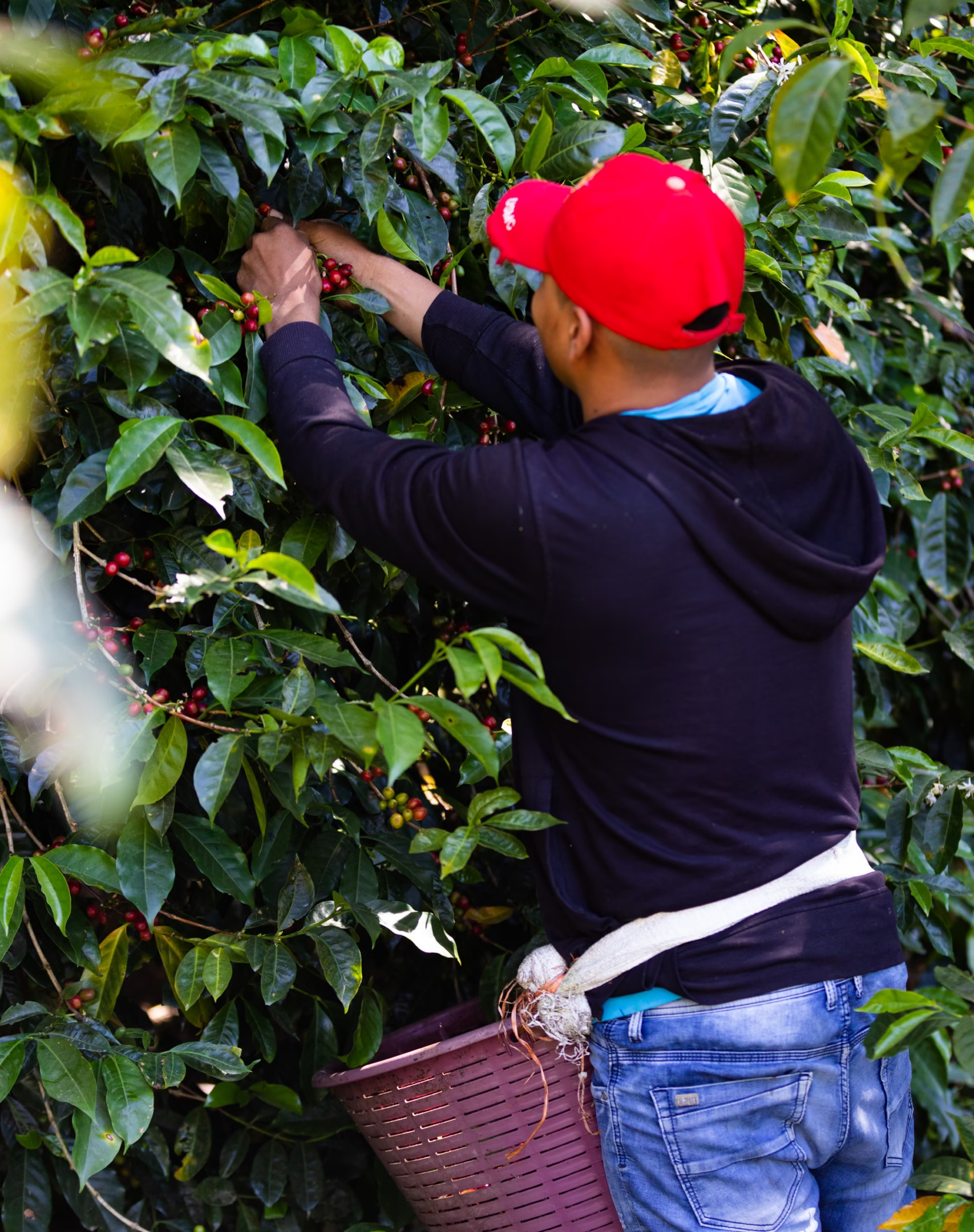
Harvesting is the challenging art of picking just the ripest coffee cherries from the coffee trees, while making sure not to disturb any under-ripe cherries that have not yet developed their full flavor potential.

This attention to detail requires concentration and commitment from our pickers. The higher sales prices for Esmeralda Geisha coffees, allow us to pay our harvesters three times the going salary for harvesters, which ensures that their livelihood is sustainable and encourages them to meet our quality standards in harvesting.

Careful harvesting is a critical step in producing high quality coffee with complex taste profiles. If beans are picked unripe their full potential will not be unlocked, and even a few beans can substantially affect the flavor profile of our microlots. This sensitivity has become apparent to us thanks to our careful lot separation, which is another aspect of our careful approach to harvesting. By carefully dividing each lot as it is picked, we can target specific clusters of trees and accurately time the harvesting, allowing us to build unique microlots for our most quality-conscious buyers.

WASHED PROCESS


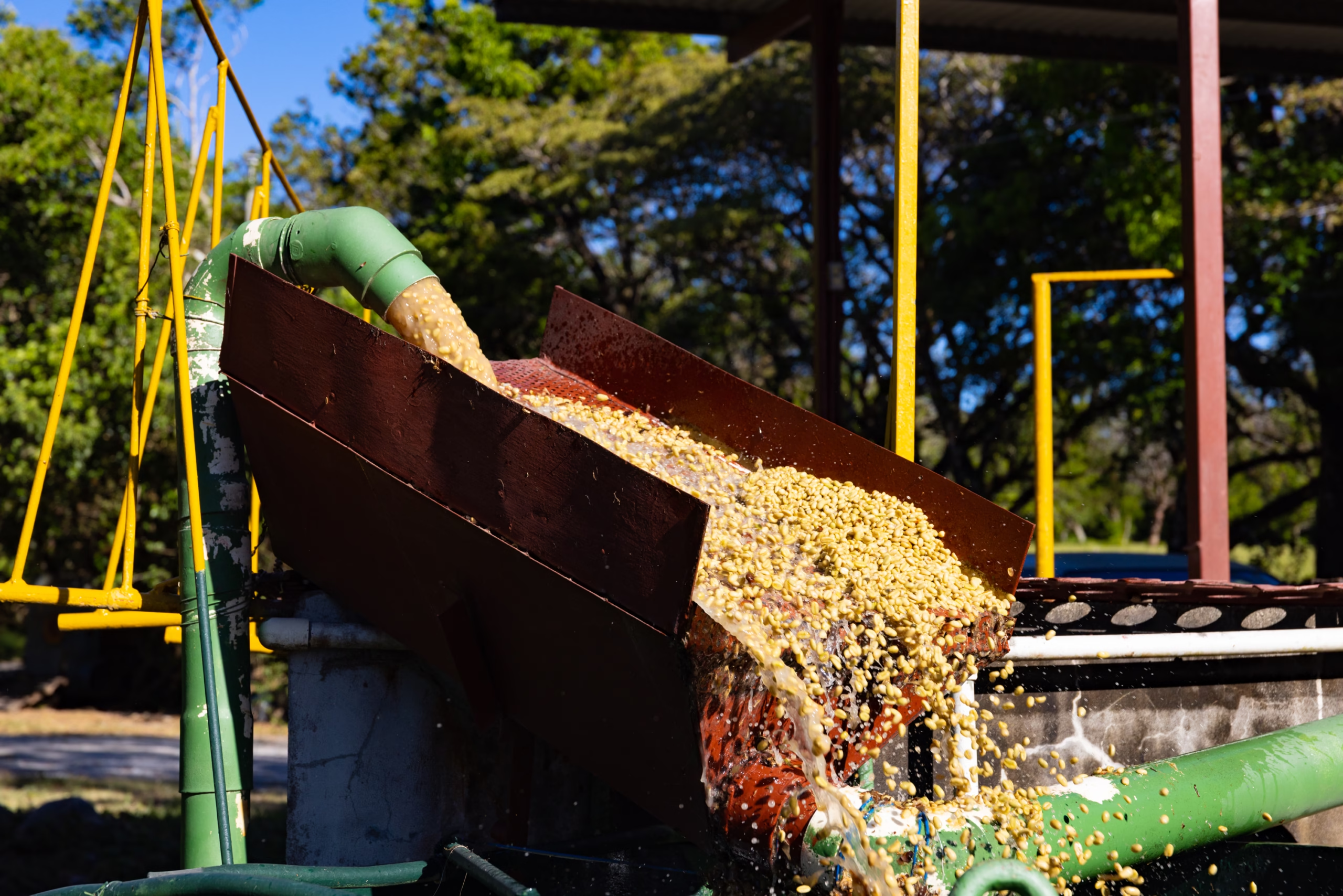
After harvest, coffee is taken into a receiving tank where water is pumped and pushed down a funnel. Floaters (unripe and overripe cherries) are discardedPulp & Mucilage Removal

Coffee pulp and mucilage are mechanically removed.

See below for more information on Fermentation and Drying.

NATURAL PROCESS


Natural coffees are bolder and have full bodies. These coffees are fruity, winey and have taste notes of prunes, plums and figs.

See below for more information on Fermentation and Drying.

FERMENTATION


Fermentation plays a critical role in the development of the coffee flavor. It is one of the most important post-harvest processing steps.

Washed Coffees: After de-pulping, the remaining coffee sits in holding tanks and ferments for 24 hours, before being put to dry in the morning.

Natural Coffees: During drying, a natural fermentation process occurs. Coffee enzymes experience a fermentation produced by the yeast and bacteria that breaks down the sugars in the mucilage.

Inoculated fermentation is a more controlled fermentation process in which selected yeasts are used in coffee fermentation in order to add cup complexity and enhance flavors and aromatics.

Anaerobic fermentation is a process in which coffee cherries are fermented in a closed container with carbon dioxide (CO2), creating an anaerobic (oxygen free) environment.

P5II9896

DRYING


During drying, the moisture content in coffee beans is reduced to 10-12%.

DRY MILLING


Dry milling is the process of preparing the coffee for exportation.


After the beans have been sufficiently dried, they are placed into nylon grain bags, where they rest for a minimum of 30 days. This rest, or “reposo”, helps stabilize the bean and improves cup quality.

Before coffee is shipped, beans go through the hulling process. During hulling, a machine removes the parchment layer that surrounds the bean.

Because there is a correlation between coffee bean size, density, and quality, beans need to be sorted. To achieve this task, we use shaking screens which are replaceable metal sheets with round holes in them that retain coffee beans over a certain size and allow smaller beans to pass. After going through the size grader, the remaining beans pass through a gravity separator. This machine shakes the sized beans on a tilted table, so that the heaviest, densest and best coffee beans vibrate to one side of the table, and the lightest ones to the other.

After being sorted, the remaining coffee beans go through the final step: color sorting. In Hacienda La Esmeralda we color sort by using a machine that has sensors that are set to identify defective beans (red, black, white, yellow). These defective beans are pushed aside with compressed air, leaving behind only the best ones.

After hulling and sorting is completed, the coffee is ready to be packed and shipped. Once our coffee is vacuum packed in carton boxes, it is then shipped and enjoyed all over the world!